The median sale price in Hood River County, OR is currently around $721,500. If you are preparing to sell a home in Hood River County in the summer of 2026, you're entering a market where buyers are active - but they've done their homework on values, and they'll walk away from a number that doesn't hold up.
Pricing is the single decision that determines how fast your home moves and how much equity you actually keep. Get it right and you'll see serious offers. Overshoot it and you're looking at a stagnant listing, a public price cut, and buyers wondering what's wrong with the place.
Local Market Conditions in Hood River County
As of mid-2026, Hood River County is sitting at about 1.9 months of housing supply - firmly seller's market territory. A balanced market runs four to six months of inventory, so buyers here have limited options and they know it.
The average sale-to-list ratio is roughly 98.5%, meaning most homes are selling very close to their original asking price. That's a meaningful shift from late 2025, when the ratio was around 96.9%. Sellers this year are pricing accurately from the start and holding their ground.
How Supply and Demand Affect Your Asking Price
With only about 48 active listings across the county recently, you have less direct competition for buyer attention than you would in a normal market. That's a real advantage.
It doesn't mean you can price without discipline, though. Buyers still rely on recent comparable sales to justify their offers - and lenders require appraisals that match the purchase price. A house priced well above neighboring properties will stall out at the financing stage even if a buyer loves it.
What Days on Market Tells Us Right Now
The median days on market in Hood River County is about 25 days. For context, in late 2024 homes were often sitting for over two months before finding a buyer. Twenty-five days is a fast-paced environment.
That number gives you a concrete benchmark. If your listing isn't generating offers or showings within the first three to four weeks, the asking price is out of step with what buyers expect to pay.
How a Comparative Market Analysis Works
Real estate agents use a Comparative Market Analysis (CMA) to determine a property's fair market value. The data comes directly from the Multiple Listing Service (MLS), and it compares your home against similar properties that have recently sold or are currently listed in the area.
A CMA doesn't deal in broad county averages. It drills down to your specific neighborhood, your square footage, your lot size, your bedroom count. That precision is what removes emotion - yours and mine - from the pricing conversation.
Reviewing Recently Sold Properties
The most reliable indicators of value are homes that closed within the past three to six months. Those sold properties tell you exactly what buyers were willing to pay and what lenders were willing to finance - two different ceilings that both matter.
If three comparable homes nearby sold for around $720,000, listing a similar property at $800,000 is going to be a hard case to make. Sold comparables form the floor and ceiling of any honest asking price.
Evaluating Active Local Listings
Active listings are your current competition. Buyers will walk through those homes and yours in the same weekend, and they'll compare what they're getting for the money.
If nearby listings offer similar features at lower asking prices, buyers will submit offers there first. Keeping an eye on active inventory is how you position your home to be the obvious choice rather than the one that got skipped.
Factoring in Upgrades and Condition
No two houses are identical, even in the same subdivision. A CMA adjusts the baseline value up or down based on your property's actual condition - not a neighborhood average.
A recently replaced roof, updated electrical, or a modernized kitchen will push your value above an unrenovated neighbor's. Deferred maintenance will pull it back down, because a buyer is going to price that work into their offer whether you acknowledge it or not. You will also need to document these issues on the seller's property disclosure.
Common Approaches to Pricing Your Home
Sellers generally choose from three main pricing paths, and the right one depends on your timeline, the specific property, and where buyer demand is sitting right now.
In a market with roughly 1.9 months of supply, you have real leverage. But leverage isn't a strategy on its own - you still need a deliberate plan, because each approach carries its own trade-offs.
Pricing at Market Value
Listing at the appraised or CMA-determined value is the most straightforward call you can make. It tells buyers you're realistic and ready to close.
Homes priced at market value tend to draw steady, serious interest. In Hood River County, where the sale-to-list ratio is running at 98.5%, this approach typically produces a clean sale with minimal back-and-forth on price.
Pricing Below Market Value
Listing slightly below estimated value is a deliberate play to generate early momentum. The goal is to bring in a large pool of buyers quickly and let competition do the work.
About 12.5% of recent sales in the county closed above the asking price. When multiple buyers are competing for the same home, that final number often climbs back to - or past - actual market value.
The Downsides of Overpricing
Pricing well above market value to leave yourself negotiating room tends to backfire in a specific, predictable way. Buyers searching within price filters online may never see your listing at all.
Once a home sits past the 25-day local median, it starts to feel stale. Buyers assume there's something wrong with it. What follows is usually lowball offers or a public price reduction - neither of which is the outcome you were hoping to manufacture with a high list price.
Why Online Estimates Fall Short
Automated Valuation Models (AVMs) on the major real estate portals will give you a quick number based on public tax records and recent sales data. They're a reasonable starting point and nothing more.
The problem is context. An algorithm has never walked through your front door. It can't evaluate what it can't see.
The Limits of Automated Valuation Models
AVMs struggle with unique properties, and Hood River County has plenty of them. The system often can't distinguish between a standard city lot and a rural property with acreage or an orchard - they may look identical in the data.
Interior condition is another blind spot. An algorithm assigns the same value to a house with original 1980s finishes and one that went through a full interior remodel last year, provided the square footage matches. That's a meaningful gap in the real world.
What Appraisers See That Algorithms Miss
A licensed appraiser evaluates the nuances that actually drive market value - quality of construction, functional layout, the condition of major systems. Things that don't show up in a tax record.
They also factor in external influences: proximity to a busy road, or whether the property has a clear view of Mt. Hood or the Columbia River. Local agents use the same granular approach when building a CMA, so the asking price reflects what buyers in this specific market will actually pay - not a computer-generated average.
Frequently Asked Questions About Selling in Hood River County
How do you accurately price rural or orchard properties in Hood River County, OR compared to standard city lots?
Pricing rural properties means working with specialized comparables rather than standard neighborhood sales. Appraisers and agents evaluate the land value, zoning restrictions, and any agricultural infrastructure separately from the main residence.
How much does a Mt. Hood or Columbia River view add to a property's asking price in Hood River?
It depends on the scope and permanence of the view. A clear, unobstructed view of Mt. Hood or the Columbia River does increase a home's value - but pinning down the exact premium requires comparing recent sales of similar view properties against non-view homes in the same area.
Is it a good strategy to price a home slightly below market value to spark a bidding war in Hood River County?
It can be an effective move in a low-inventory market. With the county sitting at just 1.9 months of supply, pricing slightly below market value can pull in multiple buyers, and roughly 12.5% of recent local sales have already closed above the asking price.
How many days should I wait before dropping my listing price if my Hood River, OR house isn't selling?
Evaluate your pricing if you're not seeing offers or showings within three to four weeks. The current median days on market is about 25 days, so a home sitting longer than that is a signal that the price needs a second look.
Should I offer buyer concessions or closing cost credits instead of lowering my asking price in the current local market?
It depends on the feedback you're getting from buyers. In a market where homes are selling for 98.5% of their list price, offering closing cost credits can sometimes offset costs for buyers short on upfront cash - without requiring a formal price reduction on your end.
How does the winter off-season impact real estate pricing strategies and buyer demand in Hood River County, OR?
Winter brings fewer active buyers and thinner inventory. If you're listing during the off-season, price accurately to attract the serious, motivated buyers who are still in the market - don't use slow conditions as cover to test an aspirational number.
FROM OUR BLOG
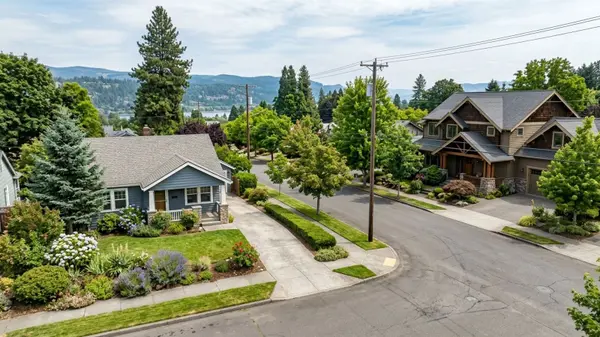
Hood River Heights vs Heights District: Local Real Estate Guide to Hood River County, OR
Buyers looking for the best neighborhoods in Hood River County often try to compare Hood River Heights vs Heights District, assuming they're two distinct neighborhoods. They're not. Both names point to the exact same area - locals just call it "The Heights" - an active residential and commercial hub
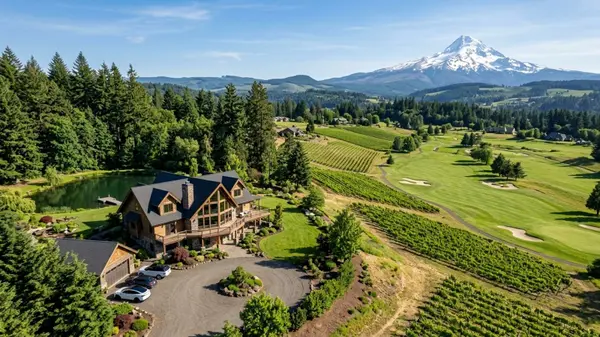
Exploring the Most Expensive Areas in Hood River County, OR
Hood River County carries some of the highest real estate premiums anywhere in the Columbia River Gorge. As of mid-2026, the countywide median sale price sits around $721,500 - and buyers looking at the high end will find a market shaped by acreage, orchard views, and access to outdoor recreation ac
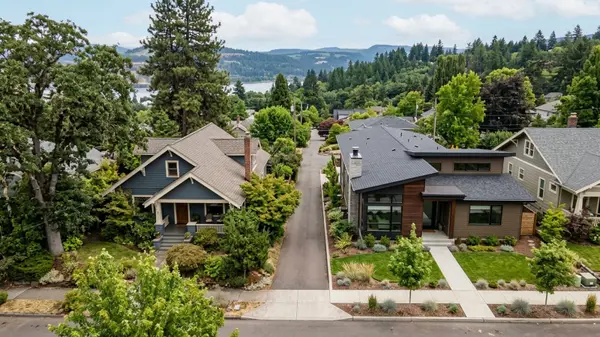
Real Estate and Living in the Eastside of Hood River County, OR
Hood River County sees median home prices hovering around $721,500, and the Eastside area reflects that broader market. What you'll find here is a mix of established neighborhoods and solid access to local trail systems, making it one of the best areas in Hood River County if you want to be close to
GET MORE INFORMATION